

Have you ever met someone who always talks about themselves, puts their needs first, and never really considers how their actions affect others? Maybe you’ve called them selfish, egoistic, or even narcissistic.
But here’s the thing—while egoistic and narcissistic people may seem similar, they are actually very different in how they think, behave, and affect those around them. And if we don’t understand this difference, we might end up misjudging people or, worse, allowing toxic relationships to drain us.
So, let’s break it down and figure out where the thin line lies between an egoist and a narcissist—and why it matters.
What Does It Mean to Be Egoistic?
An egoistic person is someone who focuses on themselves, their needs, and their personal growth. They prioritize their interests over others, but that doesn’t mean they are intentionally harmful or manipulative.
Think of an egoist as someone who puts their oxygen mask on first in an airplane. They believe in looking out for themselves, sometimes even at the cost of ignoring others, but they don’t necessarily have bad intentions.
Traits of an Egoistic Person:
✅ Thinks about their own needs first
✅ Can be independent and self-reliant
✅ May come across as selfish but is not necessarily manipulative
✅ Doesn’t seek excessive admiration from others
✅ Can acknowledge others’ achievements without feeling insecure
When Ego Becomes a Problem:
A little bit of ego is healthy—it helps us stand up for ourselves, chase our dreams, and set boundaries. But if it goes unchecked, an egoist can become arrogant, stubborn, and dismissive of other people’s feelings.
What Does It Mean to Be Narcissistic?
Narcissism, on the other hand, takes self-importance to an extreme level. Narcissists don’t just prioritize themselves—they expect the world to revolve around them. They crave admiration, feel entitled, and often manipulate others to maintain control.
Unlike egoists, narcissists aren’t just focused on themselves; they also undermine others to make themselves feel superior.
Traits of a Narcissistic Person:
❌ Feels entitled and superior to others
❌ Craves constant admiration and validation
❌ Lacks genuine empathy for others
❌ Can be manipulative and controlling
❌ Struggles to handle criticism and rejection
Why Narcissism is Dangerous:
Narcissistic people don’t just put themselves first—they often exploit others to get what they want. They manipulate, lie, and gaslight people into doubting their own worth. Over time, dealing with a narcissist can leave you emotionally drained, confused, and questioning yourself.
The Thin Line: Where Do They Differ?
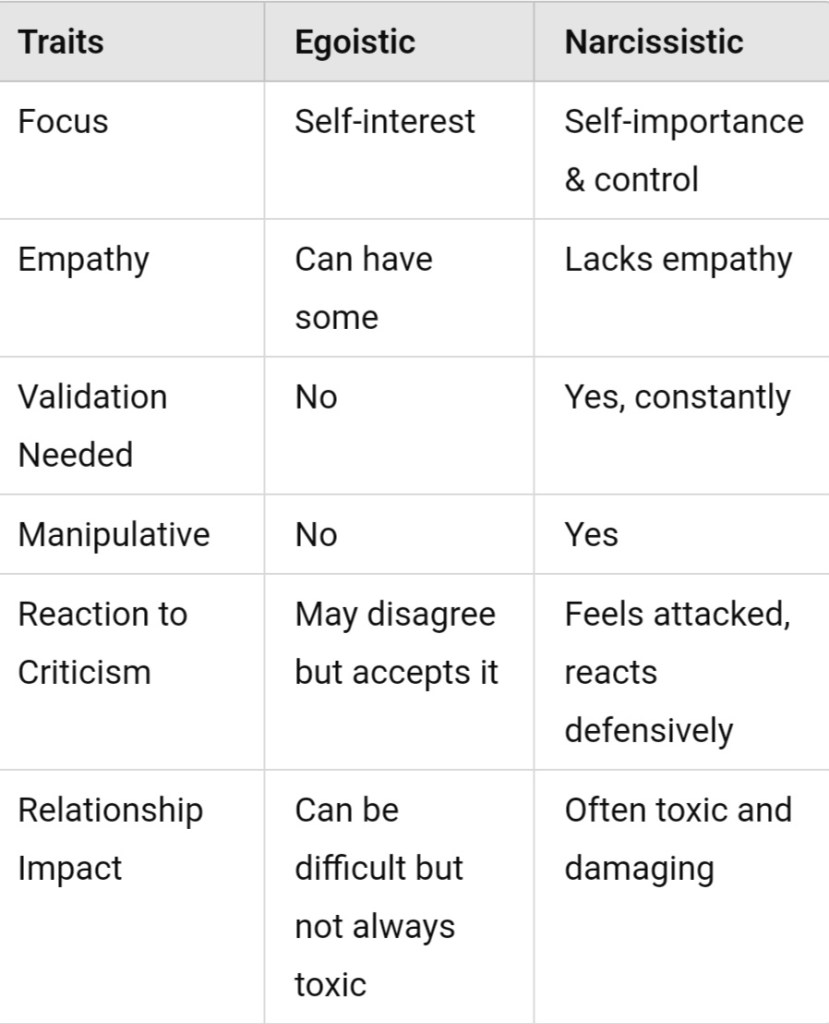
A Simple Way to Remember the Difference:
An egoist is like a solo traveler who wants to reach the top of the mountain by their own efforts.
A narcissist is like a ruler who wants to be carried to the top and admired while others struggle below them.
Why Does This Matter?
1. It Helps Us Recognize Toxicity Early
Not everyone who puts themselves first is a narcissist. But if someone is constantly manipulating, controlling, and emotionally draining you, it’s a red flag. Understanding this difference helps us know who to trust and who to be cautious around.
2. It Prevents Us from Misjudging People
Sometimes, we label people “narcissistic” just because they have strong opinions or prioritize their goals. But a person with a healthy ego can still respect others. Recognizing the distinction helps us avoid unfair judgments.
3. It Encourages Healthy Self-Reflection
We all have moments of ego. Sometimes we want to be heard, validated, or appreciated. But self-awareness helps us keep our ego in check before it crosses into narcissism. We can learn to be confident without needing to diminish others.
Conclusion: Confidence vs. Toxicity
Both egoistic and narcissistic people focus on themselves, but the key difference is their impact on others. An egoist might be a little self-involved but still capable of fairness and kindness. A narcissist, however, thrives on control and admiration at the cost of others.
So, the next time you encounter someone who seems self-centered, ask yourself:
Are they just looking out for themselves, or do they need to put others down to feel superior?
Do they prioritize themselves without harming others, or do they expect everyone to serve their needs?
A little ego can help you live a strong, independent life. But true confidence is built on self-awareness, empathy, and respect—not manipulation or control.
And that’s the real difference.
 Namrata's Diary
Leave a comment