
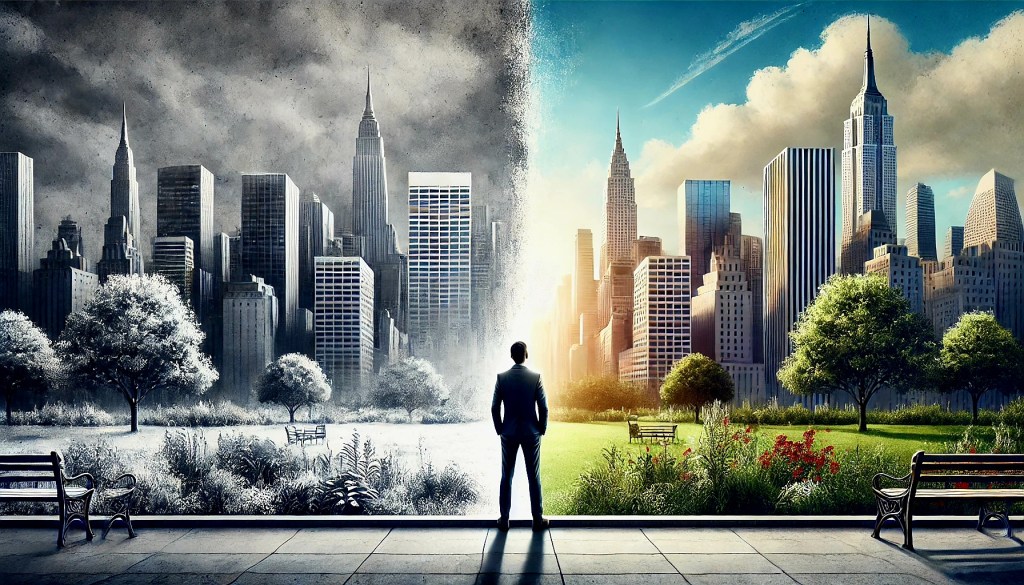
I once heard a story about two travelers who stumbled upon an abandoned castle. One looked at the crumbling walls and saw decay, a place long forgotten. The other saw potential — a space that, with care, could be restored to its former glory.
The castle hadn’t changed. But the way they saw it was entirely different.
Life is a lot like that castle. What you see in front of you is often less about the reality itself and more about what you believe to be true. Your beliefs act like lenses, coloring how you interpret the world, your experiences, and even yourself.
The question is: Are your beliefs helping you see possibility — or are they blinding you to it?
Let’s explore how belief shapes perception and how changing your beliefs can change the way you see life itself.
Beliefs Are the Frame, Not the Picture
Imagine standing in front of a window. The landscape outside stays the same, but the frame you look through changes how you experience the view. A clean, clear window lets in sunlight and vibrant colors. A cracked or dirty window distorts the scene, making everything seem dimmer and less inviting.
Your beliefs are like that frame.
• If you believe you’re unlucky, even fortunate moments might feel like flukes.
• If you believe people are unkind, you might miss the small acts of kindness around you.
• If you believe you’re unworthy of love, you might unconsciously push people away — even the ones who care for you.
The way you believe the world works changes what you notice about it. And what you notice becomes your reality.
The Brain’s Built-in Filter: Why We See What We Expect
There’s a scientific reason for this! Our brains have a system called the Reticular Activating System (RAS), which acts like a filter, helping us focus on what we deem important. It’s the reason you suddenly start noticing a certain car everywhere after deciding you want to buy it. Your brain, constantly bombarded with information, zeroes in on what aligns with your thoughts and beliefs.
If you believe the world is full of opportunities, your RAS will start highlighting them. If you believe nothing ever works out for you, your brain will — without meaning to — find proof of that belief.
This is why changing what you believe is the first step to changing what you see.
From Limiting Beliefs to Liberating Ones
So, how do you shift those beliefs? How do you swap out the cracked window for a clearer one?
Here are a few ways to start:
• Identify the Belief: Pay attention to your inner dialogue. When something goes wrong, what do you tell yourself? If you catch thoughts like I’m not good enough or I always mess up, write them down. The first step is bringing those limiting beliefs into the light.
• Challenge the Narrative: Ask yourself: Is this belief true?Or is it just a story I’ve been carrying? Often, beliefs are inherited — from parents, teachers, past experiences — but they aren’t absolute truths.
• Collect Counter-Evidence: If you believe you’re not resilient, start looking for evidence to the contrary. Remember times you overcame adversity, even small ones. The more proof you gather, the weaker the old belief becomes.
• Speak New Truths into Existence: Affirmations might feel strange at first, but they help rewire your brain. Saying things like I am worthy of happiness or I attract good things into my life may not feel true initially, but over time, your brain starts aligning with those statements.
• Act as If: Even before your beliefs fully shift, start acting as if they’ve already changed. If you want to believe in your capabilities, take action toward your goals, even if doubt lingers. Action reinforces belief.
When You Change Your Belief, You Change Your World
Imagine how life might look if you truly believed:
• Every setback is a setup for growth.
• You are worthy of love and joy, just as you are.
• There is beauty to be found, even in difficult seasons.
• You are capable of creating the life you dream of.
Wouldn’t the world seem different? Wouldn’t the possibilities seem bigger?
The truth is, life is a blend of light and shadow. You can’t always control what happens, but you can control how you interpret it. And that interpretation — shaped by your beliefs — makes all the difference.
So, what if you started believing in hope?
What if you started believing in your own strength?
What if you started believing that life, even with its struggles, is still full of magic and meaning?
Maybe, just maybe, you’d start seeing those things everywhere.
Because it’s not what you see that defines your experience — it’s what you believe that makes you truly see.
And the best part? You get to choose what you believe.
 Namrata's Diary
Leave a comment