
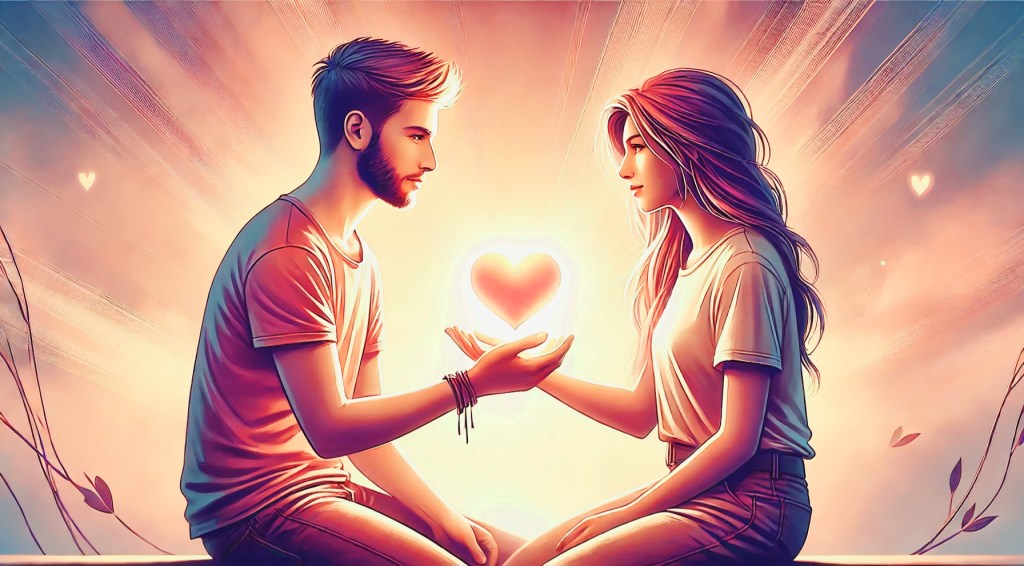
Love is one of the most powerful forces in our lives, yet we often misunderstand its true nature. We either crave love desperately, hoping to be filled by others, or we give endlessly, forgetting to keep anything for ourselves. But here’s the truth: love is not just about giving or receiving—it’s about balance.
We forget that a giver can also be a receiver and vice versa. We forget that loving ourselves is just as important as loving others. And most of all, we forget that an empty heart cannot pour into another.
The Common Mistakes We Make in Love
Many of us fall into certain patterns when it comes to love. Here are the three most common:
• The Over-Giver – This person gives so much that they have nothing left for themselves. They believe love is about sacrifice, but they forget that love is also about receiving.
• The Seeker – This person constantly looks for love outside of themselves, expecting others to fill the gaps they feel inside. They often feel disappointed because no amount of external love can replace self-love.
• The Balanced One – This person understands that love flows both ways. They give freely but also allow themselves to receive without guilt. They know that love starts from within and expands outward.
Which one do you relate to the most? If you’re more of a giver or seeker, it might be time to rethink your approach to love.
The Importance of Receiving Love
Many people feel uncomfortable receiving love. They brush off compliments, downplay kindness, and reject emotional support. But why?
• Some believe they don’t deserve it.
• Others feel vulnerable when accepting love.
• Some think that receiving makes them weak or dependent.
But here’s the reality: Accepting love doesn’t make you weak—it makes you human. Just as we love seeing others happy when we give, others feel the same joy when they give to us. Love is meant to be shared, not blocked.
Self-Love: The Foundation of All Love
Before we can give or receive love fully, we need to love ourselves. Self-love isn’t about being selfish or ignoring others—it’s about recognizing your own worth.
Ways to Practice Self-Love
• Speak kindly to yourself – If you wouldn’t say it to a friend, don’t say it to yourself.
• Accept help and kindness – Allow yourself to receive love from others without guilt.
• Set boundaries – Giving too much at the expense of your well-being is not love—it’s self-neglect.
• Do things that bring you joy – Love yourself enough to prioritize your happiness.
When you truly love yourself, you won’t have to beg for love or exhaust yourself trying to prove your worth. Love will flow naturally, both in and out.
How to Balance Giving and Receiving Love
If you feel like love in your life is out of balance, try these steps:
• Notice your patterns – Are you always giving but never receiving? Or are you always seeking but not giving enough? Awareness is the first step.
• Allow yourself to receive – The next time someone gives you a compliment, simply say “thank you” instead of dismissing it.
• Give without overextending – Love others, but not at the cost of yourself. Learn when to step back.
• Communicate your needs – Love isn’t about reading minds. If you need love in a certain way, express it.
• Surround yourself with balanced relationships – Be with people who both give and accept love freely.
Conclusion
Love is not a competition of who gives more or who receives more. It is a flow, a dance, a connection that thrives on balance. The healthiest love is one where both partners, friends, or family members give and receive freely—without guilt, without expectations, and without fear.
So ask yourself: Am I loving in a way that nurtures both myself and others? Am I open to receiving love as much as I give?
Because at the end of the day, love is not just something we give away. It’s something we must also allow ourselves to feel, to accept, and to embrace.
 Namrata's Diary
Leave a comment