
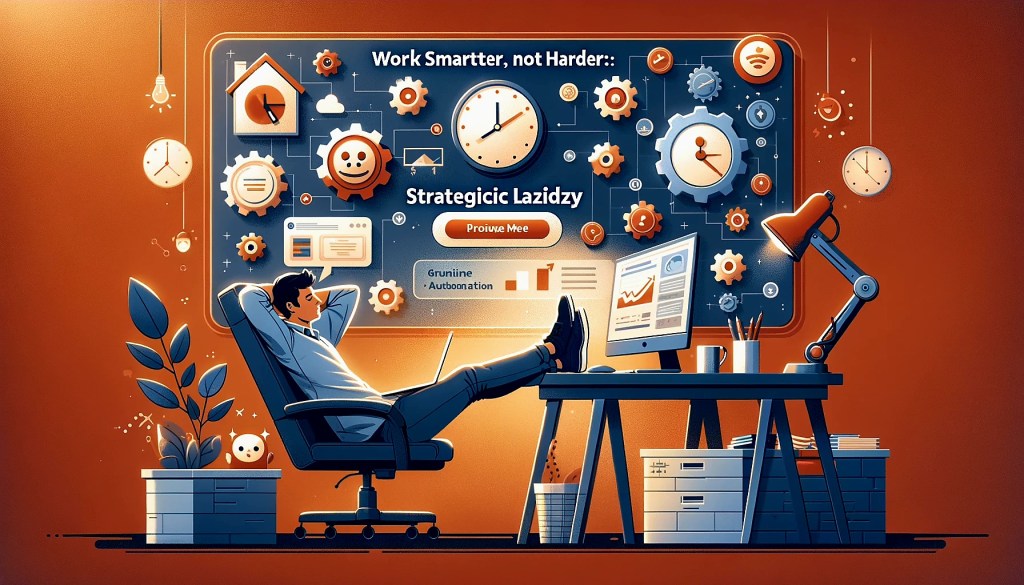
Laziness often gets a bad reputation. Society tells us that being lazy means being unproductive, unmotivated, or even unsuccessful. But what if laziness isn’t the enemy? What if, instead of fighting it, we embraced it and used it to our advantage?
Believe it or not, some of the greatest minds in history—Albert Einstein, Isaac Newton, and even Bill Gates—have been known to lean into their laziness. Not because they didn’t want to work, but because they found smarter, easier ways to do things.
The truth is, laziness can be a strength if used correctly. It forces us to prioritize, automate, and focus on what truly matters. Instead of working harder, we learn to work smarter.
So, how can we turn laziness into an advantage? Here are seven steps to help you harness the power of laziness and make it work for you.
Step 1: Accept Your Laziness—Own It
The first step to making laziness work for you is to stop feeling guilty about it. Everyone has moments when they just don’t feel like doing anything. Instead of fighting it, see it as an opportunity.
Laziness isn’t always a lack of motivation—it can be your brain’s way of telling you that something isn’t efficient, or that you need a break. Instead of forcing yourself through unnecessary effort, embrace laziness as a sign that there’s a smarter way to get things done.
✅ Action Tip:
Next time you feel lazy, don’t panic. Instead, ask yourself: “Is there an easier way to do this?” Efficiency beats effort every time.
Step 2: Prioritize Like a Lazy Genius
Lazy people don’t waste time on things that don’t matter. They focus on the essentials and ignore the rest. Some of the most successful people in the world are great at delegating, simplifying, and prioritizing.
Why? Because doing everything is impossible. The trick is to do what actually moves the needle.
✅ Action Tip:
Write down everything you need to do today. Now, ask yourself:
• Which of these tasks actually matter?
• What can I eliminate, delegate, or simplify?
Do what’s important. Skip the rest.
Step 3: Automate and Delegate—Do Less, Achieve More
Laziness and efficiency go hand in hand. Instead of wasting energy on repetitive tasks, smart lazy people find ways to make things easier. They automate, delegate, or create systems that handle work for them.
For example:
• Use automation tools for emails, finances, and scheduling.
• Delegate tasks at work or at home (yes, even asking for help is a skill!).
• Create templates, checklists, or shortcuts to speed things up.
✅ Action Tip:
Identify one repetitive task you do regularly. Can you automate it with an app? Can someone else do it for you? If yes, make the change.
Step 4: Master the 80/20 Rule (Do Only What Works)
The Pareto Principle (or the 80/20 rule) states that 80% of results come from 20% of efforts. Smart lazy people naturally follow this rule. They focus on the small things that create the biggest impact and ignore the rest.
Instead of spreading yourself thin, concentrate on the 20% of actions that bring the most value.
✅ Action Tip:
Look at your work or daily routine. What’s the 20% that brings 80% of your results? Focus on that, and cut out distractions.
Step 5: Make Your Laziness Work for You—Create Systems
Lazy people hate doing the same thing over and over again. Instead of forcing themselves through boring tasks, they create systems that make life easier.
For example:
• Hate cooking every day? Meal prep once a week.
• Struggle to stay organized? Use reminders and planning apps.
• Always forget passwords? Use a password manager.
✅ Action Tip:
If you always procrastinate on a task, don’t fight it—find a way to make it easier. Set up systems that remove friction.
Step 6: Use Deadlines to Trick Yourself
A little pressure goes a long way. Have you noticed how you suddenly become productive right before a deadline? That’s because urgency forces action. Smart lazy people use this trick on themselves by setting “fake deadlines.”
✅ Action Tip:
• Set a timer and give yourself less time than usual to complete a task.
• Challenge yourself to finish something before a self-imposed deadline.
This will help you avoid overthinking and get things done faster.
Step 7: Rest Like a Pro—It’s Part of the Process
Laziness isn’t just about avoiding work—it’s about strategic rest. If you burn out, you’re useless. Smart laziness means taking breaks that actually recharge you.
Instead of mindlessly scrolling on your phone for hours and feeling guilty about it, schedule breaks that refresh you.
✅ Action Tip:
• Take intentional breaks—walk, nap, or meditate.
• Schedule downtime without guilt—it makes you more productive.
Final Thoughts: Laziness Isn’t the Problem—Wasting Time Is
Being lazy isn’t bad—it’s how you use it that matters. Instead of feeling guilty about it, embrace it as a tool for efficiency and smart decision-making.
If you focus on working smarter, not harder, you’ll achieve more by doing less.
So, don’t fight your laziness—work with it. You might just find that success comes easier than you ever imagined.
Now go be strategically lazy—and watch how much better life gets.
 Namrata's Diary
Leave a comment